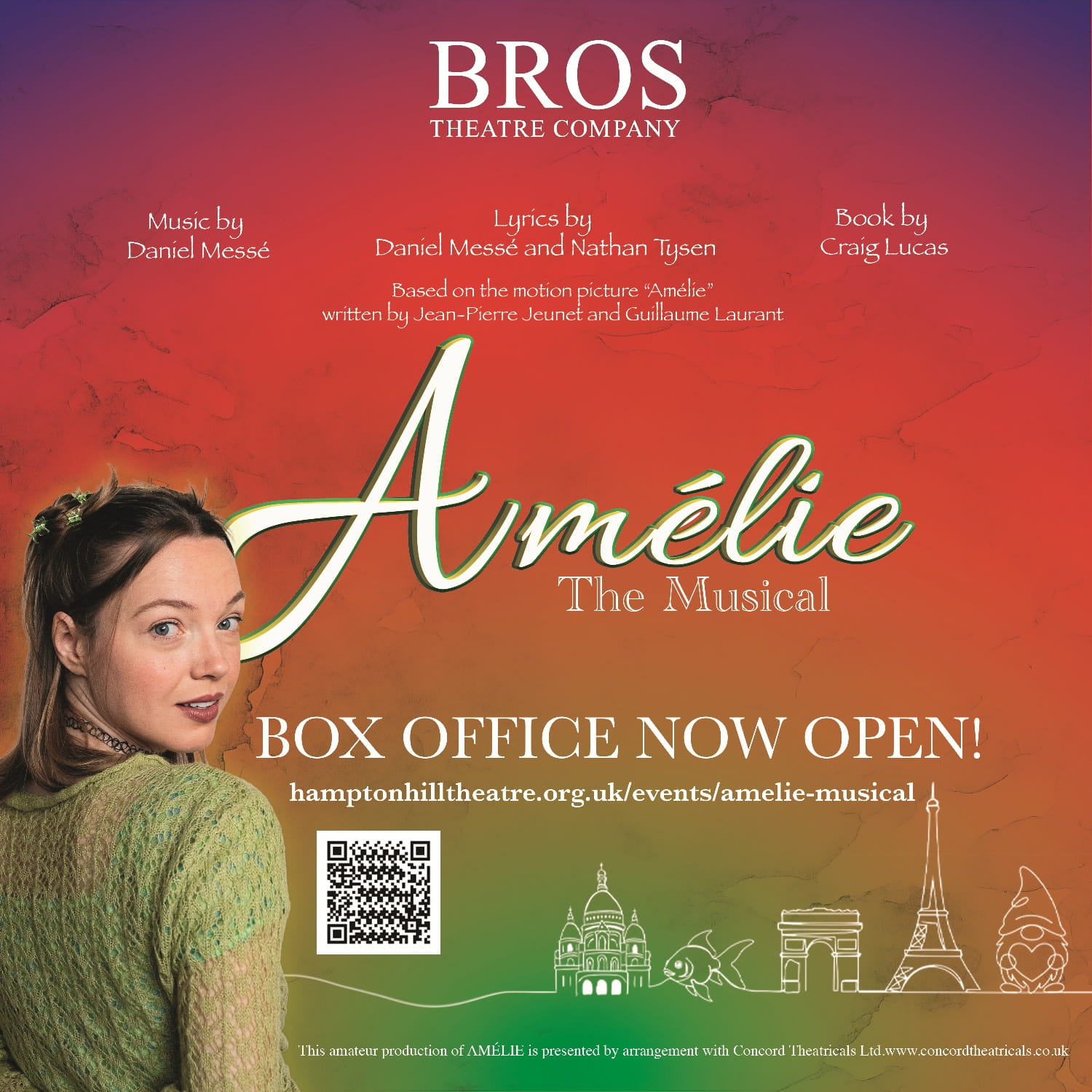
Amélie Box Office Open!
BROS Theatre Company presents Amélie the Musical – the Olivier-nominated adaptation of Jean-Pierre Jeunet’s acclaimed film. Get your tickets here! Amélie tells the story of a perceptive, imaginative woman who

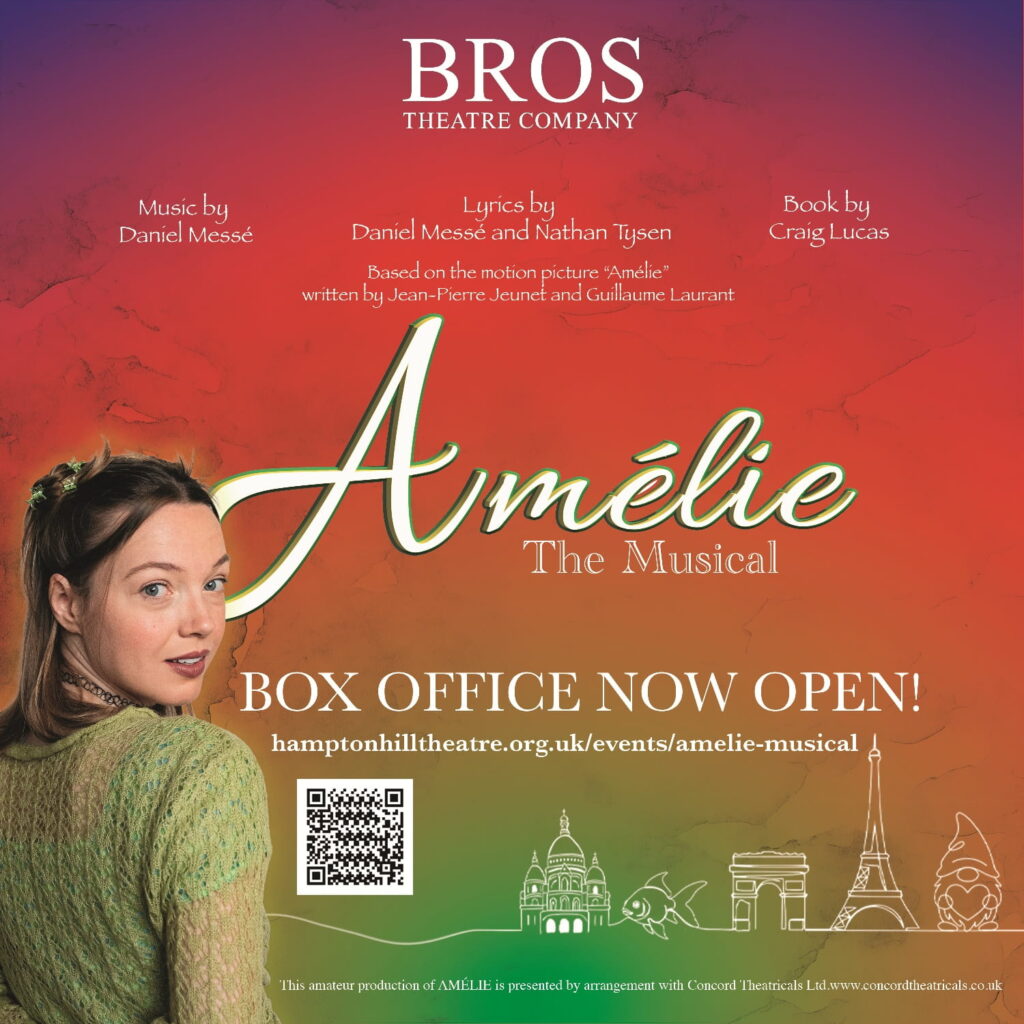
BROS Theatre Company presents Amélie the Musical – the Olivier-nominated adaptation of Jean-Pierre Jeunet’s acclaimed film. Get your tickets here! Amélie tells the story of a perceptive, imaginative woman who

We are sad to record the recent death of Mike Bradbury, much loved friend and member of BROS Some wonderful memories from Ed Pagett, about his lighting partner-in-crime: “I can’t
The Great British Bake Off Musical, Hampton Hill Theatre, Nov 2027 CREATIVES WANTED! The Great British Bake Off Musical is a comedic and heartwarming celebration of baking, self-discovery, and the